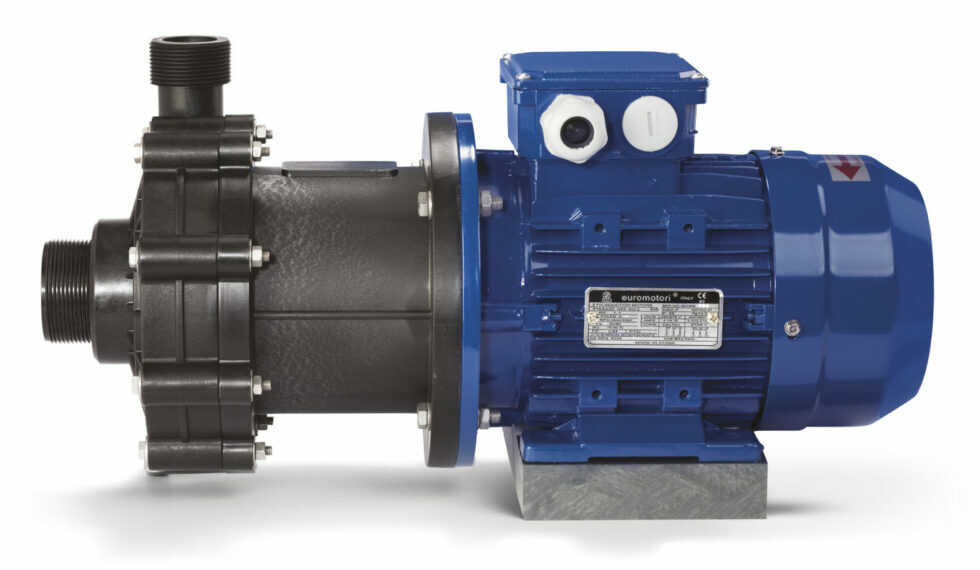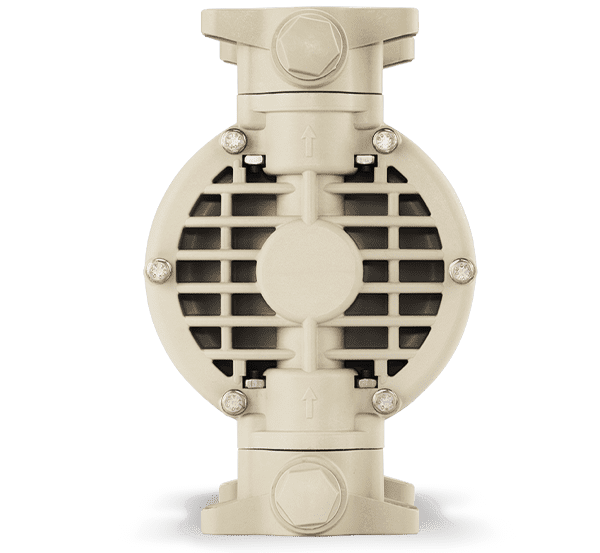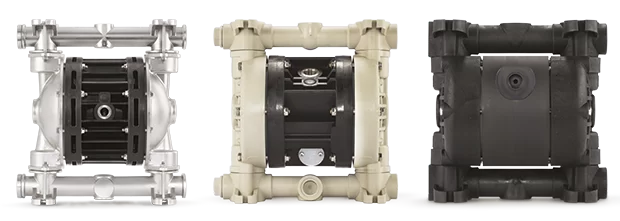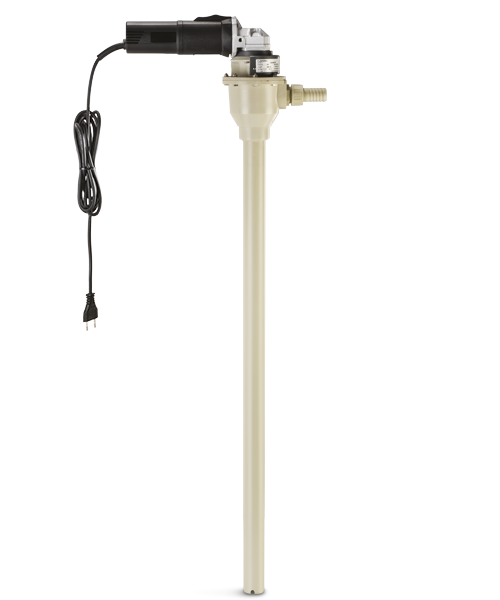
Application fields of the chemical pumps

Zero Liquid Discharge in Surface Treatment Shop

1. Introduction
A surface treatment shop employing "zero liquid discharge" is a manufacturing shop which does not discharge any waste water into the sewerage or surface waters. Zero Liquid discharge does not mean that the treatment shop does not produce any liquid waste. It means, on the contrary, that the produced liquid waste must be considered as special waste and confined to authorized companies for special waste treatment. The set up of the zero liquid discharge implies the overcoming of technical issues and high costs. These efforts can be justified by a reduction of the environmental impact of the surface treatment shops and, on the other side, by the nowadays difficulties of the shop's owners to undergo a very strict regulation:
Series of treatments
Fig. 1 - Series of treatments


2. Traditional series of treatments for wastes from surface treatment processes
The traditional series of treatments for wastes from surface treatment processes is reported in figure 1. The process requires a complex plant, made of:The control of effluents requires many measurement instruments and frequent analyses. If the treatment is accurately carried out, it allows to respect the in force regulations. The content of organic material, measured through the COD -Chemical Oxygen Demand, in the effluent is often higher than the allowed maximum limit, and also effluent salinity is high.


3. Technical choices for setting up the "zero liquid discharge"
Issues are related to the flow of rinsing waters and their salt concentration

When the salt content is low, rinsing waters can be recycled through mobile columns (1) with ionic exchange resins. Concentrated effluents, coming from exhaust baths and static rinsing, wlll be conferred to authorized places for their treatment (figure 2).

Series of treatment of the rinsing waters
Fig. 2 - Series of treatment of the rinsing waters

When the salt content is high, the use of columns with ionic exchange resins is substituted for a flxed installation of ionic exchange, with regeneration of the columns within the surface treatment shops. Exhaust baths will be conferred to authorized companies for disposal. Concentrated wastes from static rinsing and eluents of regeneration resins usually are characterized by large volume, requiring concentration by evaporation in order to reduce transportation costs and disposal at authorized sites. The distillate from evaporation can be recycled and reused in the production process (figure 3).

Series of treatment of the rinsing waters
Fig. 3 - Series of treatment of the rinsing waters when low and salt content are very high


It must be noted that the regeneration of ionic exchange resins can become a frequent maintenance operation and a heavy duty for the treatment shops.
If flow and salt content are very high, it becomes necessary the opportunity of specific treatment for each rinsing station.
Let us consider an intermediate situation, in which the treatment through ionic exchange is too much demanding but rinsing flows are not so important to justify individual station treatment.


4. Study of the intermediate condition (neither ionic exchange nor individual station treatment)
The basic of the treatment is reported in figure 4.

Effluent treatment
Fig. 4 - Intermediate effluent treatment.

Concentration can be carried out through evaporation or inverse osmosis. Problems are nonethelessReduction of rinsing water flow
Irrespective of the employed process, i.e. evaporation or inverse osmosis, the concentration ratio, talking of volumes, does never exceed the value of 20. For a surface treatment shop with effluent flow of 20 m3/day, it is therefore necessary to storage al least 1 m3/day, if there is no rinsing flow reduction. In a year, many m3 will be stocked and disposed to authorized sites. It is essential to reduce drastically the rinsing water flows, already limited by law at 8 l/m2 of treated surface and for rinsing station or unit (Law of September 26,1985). The production engineer, in order to achieve a reasonable rinsing flow, can operate on three parameters (figure 5):

Rinsing sequence
Fig. 5 - Rinsing sequence

The flow Q of rinsing water to be used can be calculated through the formula:

Formula

where:
n = number of rinsing water tanks
C0 = concentration in the treatment bath
C'0,= concentration in the static bath which comes before the sequence of counter-flow rinsing tanks
Cn= concentration of the last rinsing tank

The concentration Cn is defined by the required qualiiy for rinsing (C0/ Cn = 10.000). For example, if C'0 = C0 /5, the flow Q for the first reported sequence is 6.7 m3 and for the second is 1.1 m3. The flow is reduced of a factor of six, from the first to the second sequence.

Mixing of effluents
Effluent flows are very different among each other in a traditional surface treatment shop. There are effluents from
  • degreasing
  • metching
  • electrolytic of chemical deposition bath
  • post-treatments
These effluents can be acid, neutra1 or alkaline, can contain chemicals which can react if mixed and generate toxic compounds (e.g. cyanide acid) or solid materials which modify the concentration (precipitates,...). In order to avoid these problems, two separate flows, one acid and the other alkaline, are generally used


5. Concentration through evaporation

Process flow of the water treatment through evaporation
Fig. 6 - Process flow of the water treatment through evaporation

In figure 6 the process flow of the water treatment through evaporation is reported. ICosts for evaporation, due to the required characteristics, are generally high:
  • Effluents contain aggressive substances (chlorides, fluorides, ...) towards stainless steel, which becomes not the best choice for increasing concentration. The exchanger must be therefore made by expensive special alloys. The aggressiveness of the medium must be considered during the choice of the materials of other components of the concentrator, such as pumps and pipes
  • The presence of surfactants in the effluents can . lead to foam formations, sometime with large volume, which can drag aqueous vapor, with contamination of the condensed elements. The evaporator must be provided with shield to reduce drag out. Moreover, antifoam additives must be added in the evaporator.
  • Evaporation, due to the high evaporation enthalpy of water, requires a lot of energy. Evaporation must be carried out under partial vacuum and evaporators must be equipped with systems for energy recycling.
Evaporation can show some issues, even if it is a simple technique:
  • formation, through precipitation and crystallization, of products which can adhere to the surface of the heat exchanger, leading to difficulties in cleaning operations, with increasing problems of corrosion.
  • evolution of corrosive gas (hydrochloric and hydrofluoric acid in acid environment, ammonia and cyanidric acid in alkaline environment) and volatile material, making the post-treatment of the condensed elements required, before their use.
6. Concentration through inverse osmosis
process flow of the rinsing water treatment
Fig. 7 - Process flow of the rinsing water treatment through inverse osmosis

In figure 7 the process flow of the rinsing water treatment through inverse osmosis is reported. Inverse osmosis is a technique which employs special organic membranes, able to hold ionic substances and small organic molecules, with rejection ratio, Tr, of almost 95% (Tr = 1 -Cp/Co where Cp: permeate concetration and Co: feed concentratlon). Membranes are organic polymers. As a function of their chemical nature, they can work at high temperatures (70° C), at interesting pressure (for some membranes higher than 50 bar) and at pH between 2 and 11. They are sensible to oxidant agents. The permeate flows, for pure water, are proportional to the difference of pressure on the two sides of the lateral wall and membrane surface.

Q = KS (Δp)

For a solution containing electrolytes, the equation reported above is modified in order to take into account the osmotic pressures on the two sides of the membrane:

Q = KS (Δp - Δpi)

There are a lot of issues with inverse osmosis. It is necessary to operate with:
  • large surface membrane, due to the fact that permeate specific flow are low (from 10 to 20 l m2). In most cases; modules have a spira1 shape, a solution which offers the advantage of the high compactness.
  • high working pressures (20 bar) above the osmotic pressure
  • continuous cooling of the solutions
Membrane obstruction, due to suspended solids, precipitates or crystallized products during the treatment, must be absolutely avoided. It is therefore necessary:
  • a pre-treatment, usually the ultra-filtration of the effluent to eliminate suspended materials
  • a pH regulating system, if required to avoid precipitation phenomena
  • knowing the maximum ratio of concentration in volume to prevent any precipitation phenomenon
Due to the rejection ratios between 0.95 and 0.97, depuration is never complete and the inverse osmosis system must be at least with two steps (figure 8). Final purification actions are also required to guarantee the desired characteristics of the permeate to be reused.

Two-step osmosis treatment
Fig. 8 - Two-step osmosis treatment.


Conclusion
Zero liquid discharge is technically achievable through concentration by evaporation or inverse osmosis, as long as they are coupled with suitable pre- and post- treatment. The use of these techniques avoids the application of the expensive classic treatment and release the manufacturer from many legislative dues. Zero discharge implies the production of relevant volumes of waste which can not be easily valued and whose treatment is very expensive, even if performed out of the company by specialized and authorized companies.
The design of farms, plants and working methods must be rethinking in order to reduce the rinsing flow, keeping high standard of quality. It is necessary to study:
  • all the possibilities for recycling drag out to treatment baths, without compromising performances
  • all the techniques which allow the depuration of the baths to increase their life and usage
  • all the possibilities to enhance the value the different waste products
Economical feasibility of zero discharge is hard to define, due to the high investment and maintenance costs.


Note
(1) In France it is available a service for supplying and substitution of mobile ionic exchange columns, whose regeneration is carried out at authorized centers. Eluents of regeneration is thus produced at the service centre, which is authorized also fro its treatment.


((Article taken from AIFM-Galvanotecnica, n.1, 2007, pages 12-18. Autori: A.Vidonne/ J.Pagetti - ITSFC Inst. des Traitements de Surface de Franche Comté/Besançon, J.Halut - P.M. Protection des Métaux/Noisy))


Savino Barbera S.n.c. - Via Torino 12 - 10032 Brandizzo (To) - ITALY
Tel.: (+39) 011-913-9063 - Fax: (+39) 011-913-7313

®2005-2007 Vernondata - All rights reserved